
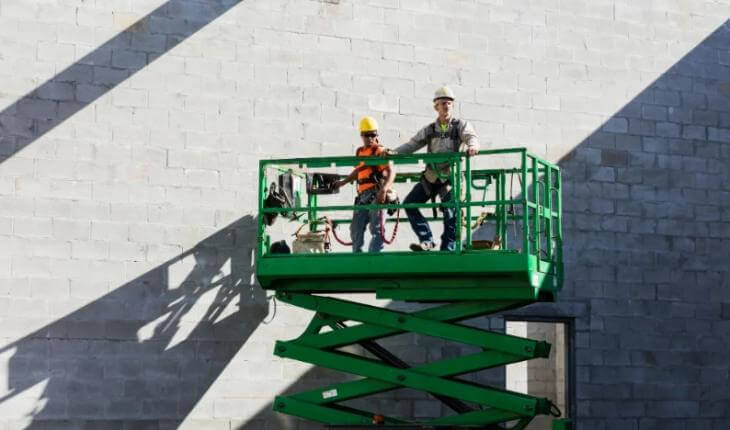
At MEWP Scissor Training, we run accredited operator training for scissor lift platforms across the UK. Our courses are designed to ensure safe, compliant use of Mobile Elevating Work Platforms (MEWPs) in construction, warehousing, facilities management, and maintenance environments.
MEWP scissor training supports compliance with health and safety legislation and industry standards such as IPAF, helping employers reduce risk, prevent accidents, and improve productivity when working at height.
How Much Does MEWP Scissor Training Cost?
The cost of MEWP scissor training ranges from £150 to £300 per candidate, depending on course delivery and accreditation.
Pricing is influenced by whether IPAF certification is required, group size, on-site versus training-centre delivery, and whether the course is for novice, experienced, or refresher operators. Corporate bookings and multiple-candidate courses may qualify for reduced per-person rates.
Contact MEWP Scissor Training to get customised pricing for training at your site or preferred location.
Who Needs MEWP Scissor Lift Certification in the Area?
Anyone operating a scissor lift in a professional environment must be trained and certified, including:
- Construction site operatives – Workers carrying out tasks at height on active sites.
- Warehouse and logistics staff – Operators accessing high-level racking or stock.
- Facilities and maintenance teams – Personnel performing repairs, inspections, or installations.
- Property and building management staff – Workers responsible for ongoing site maintenance.
- Contractors and temporary workers – Operatives required to meet site access requirements.
What Does MEWP Scissor Training Cover for Operators?
MEWP scissor training provides operators with a thorough understanding of how to safely operate vertical lift platforms in a range of working conditions. Training covers pre-use inspections, correct operation of controls, safe positioning, emergency lowering procedures, and shutdown processes.
Operators learn how to assess ground conditions, manage load capacities, avoid tip-over risks, and recognise hazards such as overhead obstructions and pedestrian traffic. Courses include classroom-based theory alongside supervised practical operation and formal assessment.
Do Training Centres Offer IPAF 3A Scissor Lift Certification?
Many training centres delivering MEWP scissor training offer IPAF 3A certification.
IPAF 3A covers vertical scissor lifts and similar MEWPs, with successful candidates receiving an IPAF PAL card valid for five years. This certification is widely recognised across construction and industrial sectors and is often mandatory for site access.
How Long Does MEWP Scissor Lift Training Take?
MEWP scissor training typically takes one full day for novice or first-time operators.
Experienced operators or those renewing certification may complete refresher or reassessment courses in half a day, subject to prior experience and provider requirements. All courses include theory instruction, practical assessment, and operator testing.
Can MEWP Scissor Training Be Delivered On-Site?
On-site MEWP scissor training is widely available and is commonly chosen by employers with multiple operators.
On-site delivery allows staff to train using the same equipment and site conditions they encounter daily, improving relevance and reducing downtime. Employers must provide suitable operating space and access to compliant equipment for training and assessment.
What Safety Risks Are Addressed During MEWP Scissor Training?
Safety-focused MEWP scissor training covers key risks associated with working at height, including:
- Tip-over and stability risks – Managing ground conditions and platform positioning.
- Collision hazards – Avoiding structures, vehicles, and pedestrians.
- Entrapment risks – Preventing crush incidents at height.
- Falls from height – Applying fall prevention principles.
- Overloading – Understanding platform load limits.
- Mechanical and power failures – Responding to faults and emergency situations.
- Pre-use inspections – Identifying defects before operation.
Is Refresher MEWP Scissor Training Required?
Refresher MEWP scissor training is typically required every five years for operators holding IPAF or equivalent certification.
Employers may also also require earlier refresher training following incidents, near misses, extended periods without use, or changes in MEWP type. Refresher courses reinforce safe practices and ensure ongoing compliance with current standards.
Can MEWP Scissor Training Be Combined With Boom Lift Courses?
Many providers offer combined MEWP courses covering both 3A (scissor lifts) and 3B (boom lifts).
Combined training is suitable for workers who operate multiple MEWP types and usually extends the course duration to one and a half or two days. Successful candidates receive certification for each category completed.
Do Employers Have Legal Duties to Provide MEWP Scissor Training?
Employers have legal responsibilities under health and safety legislation to ensure MEWP operators are trained, competent, and supervised.
This includes providing access to accredited training, maintaining records of competence, and ensuring equipment is used in accordance with manufacturer guidance and legal requirements. Failure to comply can result in enforcement action and increased accident risk.
Contact MEWP Scissor Training to discuss suitable training options for your workforce.
Find More Info
Make sure you contact us today for a number of great MEWP scissor training services.
For more information on MEWP Scissor Training, fill in the contact form below to receive a free quote today.
★★★★★
The training was clear, practical, and easy to follow, with plenty of time spent on real machine operation rather than just theory. It gave me confidence working at height and a much better understanding of safety checks and emergency procedures.
James Fletcher
Greater London
★★★★★
We booked on-site scissor lift training for our maintenance team, and the whole process was straightforward from start to finish. The instructor was knowledgeable, patient, and made sure everyone was comfortable before the assessment.
Hannah Whitcombe
Greater London